

DIY & DECORATING
Find wallpaper you’ll love living with.
Start with the room, the light and the furniture you are keeping. A sample and a few simple measurements can make choosing your next wallpaper much easier.
Ad · This shopping link earns us commission on qualifying purchases, at no extra cost to you.
- Think about the room before the pattern
- Check the hanging and cleaning symbols
- Measure every wall before ordering
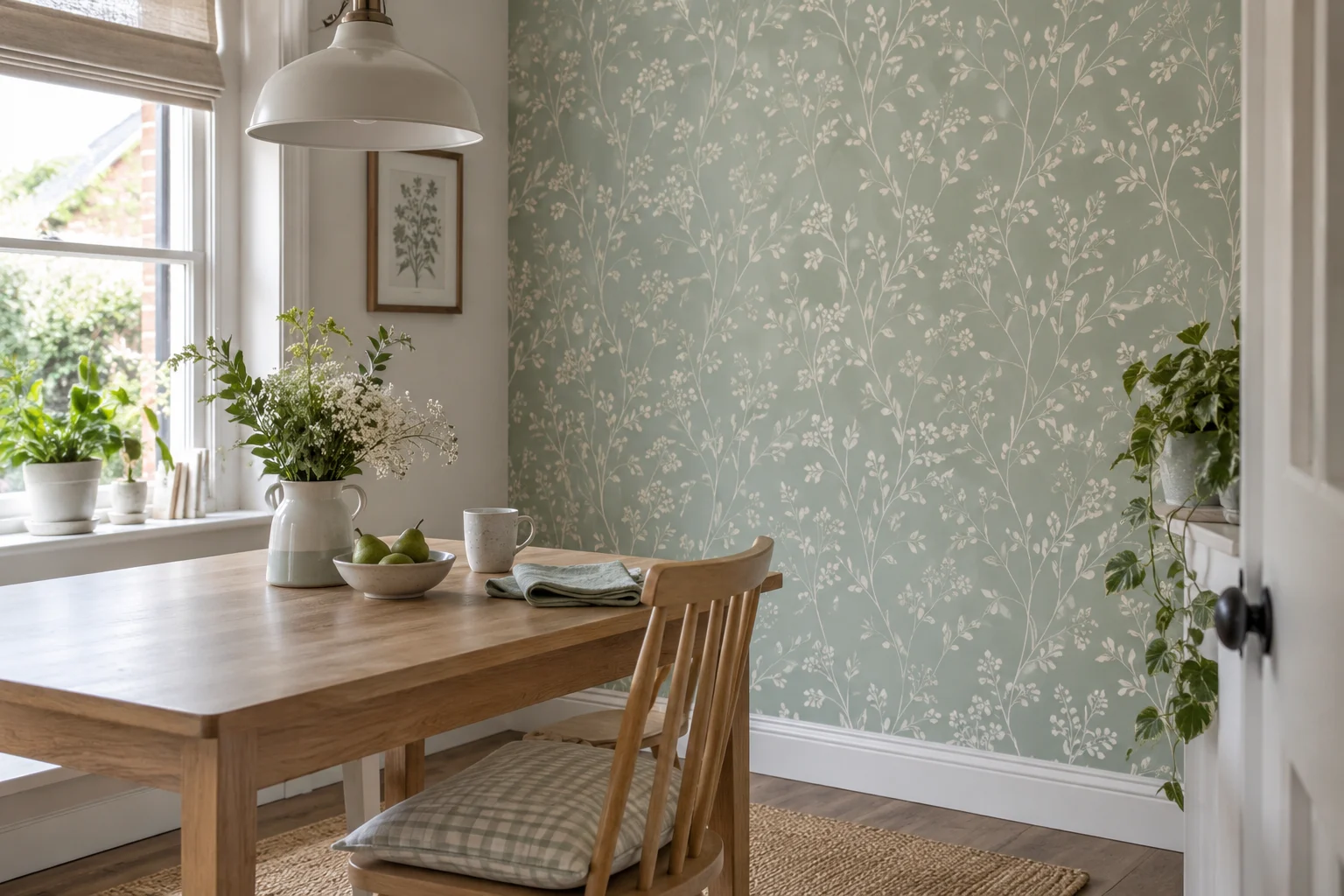
Choose the effect before the design
Do you want a quiet backdrop, a bolder feature or a room that feels cosy from every angle? A textured plain can sit comfortably behind colourful furniture; a stronger pattern can become the feature itself. Neither needs to cover every wall.
Look at a sample against your flooring, curtains and the largest pieces of furniture. Check it in daylight and with your lamps on. A small screen image cannot show the texture or how the colour changes in your own room.
What to check on the product page
| Detail | Why it matters |
|---|---|
| Roll width and length | Roll sizes vary. Use the dimensions of the wallpaper you actually choose. |
| Pattern repeat and match | A straight match and a half-drop match use paper differently. Pattern alignment can create extra offcuts. |
| Hanging method | Paste-the-wall and paste-the-paper products have different preparation and soaking instructions. |
| Cleaning symbols | Choose the manufacturer’s stated cleaning suitability for the room and level of wear. |
| Batch number | Colour can vary between batches. Ask for matching batches when ordering the rolls for one room. |
A feature wall or the whole room?
One wall is a useful way to bring in a pattern without changing everything around it. Think about what you see from the doorway, and how shelves, a bed or a large cabinet will break up the design. Mark out where the main part of the pattern would sit before committing.
For all four walls, pay attention to corners and the position of the last join. Stripes and geometric designs make a crooked line more noticeable, so a straight starting line and careful planning matter. Our wallpapering guide explains the preparation.
Choosing for kitchens and bathrooms
Check the manufacturer’s suitability for humidity, cleaning and the exact position you want to paper. Ordinary wallpaper should not be assumed suitable for splash zones or direct water exposure. Deal with damp before decorating rather than covering it over.
Work out the order before you pay
- Measure each wall’s full width and height. Note windows, doors and recesses separately.
- Use the selected roll size, repeat and match type to work out the quantity. Do not rely on wall area alone.
- Check whether paste, a liner or a primer is required and whether it is suitable for your wall.
- Review delivery costs, batch availability and returns. A second batch may not match the first.
Need a starting estimate? Use the wallpaper quantity tool (Ad). Confirm the result against the chosen product and ask the retailer or your decorator about complex patterns or awkward rooms.
A few questions before you start
Is paste-the-wall easier for a first project?
It can simplify handling because you apply the recommended adhesive to the wall. It does not remove the need for careful surface preparation, accurate alignment and following the roll instructions.
Can wallpaper hide a damaged wall?
A textured finish may make minor unevenness less noticeable, but it will not repair loose plaster, damp or a failing surface. Make the wall sound first.
Should I buy a spare roll?
Consider future repairs and the pattern’s cutting waste before ordering. Check the retailer’s advice and returns terms rather than adding an arbitrary number to every order.
Keep your project moving
Found the look you have in mind?
Browse designs, check samples and read the product’s own hanging information before you order.
Ad · Shopping link. We earn commission on qualifying purchases, at no extra cost to you.
Reviewed 2 October 2026. These guides provide general project information. Follow the instructions for the products you choose and ask a suitable tradesperson when the work needs specialist skills.